Review: Halloween Party Haunted House Shadow Box
As a designer who spends more time staring at stitch simulations than actual fabric, I have developed a keen eye for what translates well from screen to needle. When I first opened the Halloween Party Haunted House Layered Shadow Box file, my immediate reaction was not just about the spooky aesthetic, but about the structural integrity of the design. This is not merely a flat graphic; it is a 3D SVG concept that relies on depth, silhouette, and negative space. For those of us in the embroidery world, this presents both an exciting challenge and a potential pitfall depending on how we approach the digitizing or the pre-made file settings.
First Impressions and Visual Mood
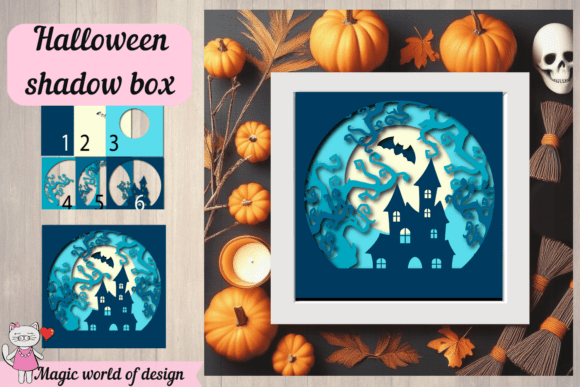
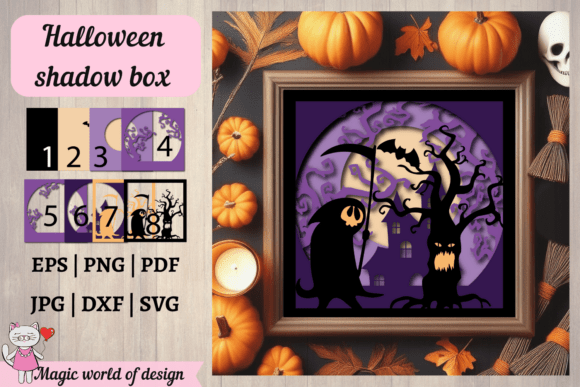
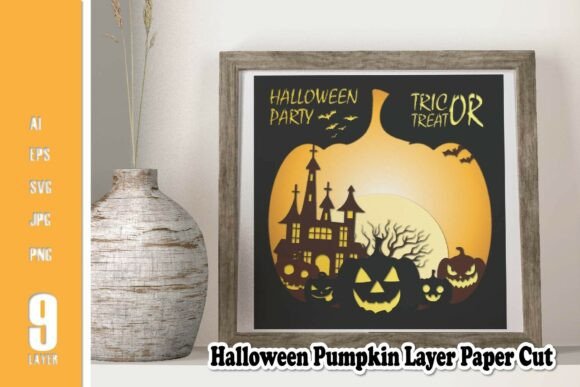
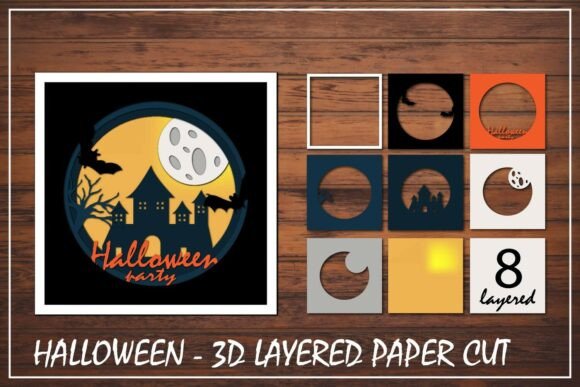
The design features a haunted house and eerie trees silhouetted against a full moon, with bats flying across the sky. This composition creates a strong focal point. The layered paper cut style suggests a need for distinct color separation. In embroidery, this translates to clear boundaries between thread colors. The mood is festive yet eerie, perfect for the season without being overly grotesque, which broadens its appeal for family-friendly holiday embroidery projects. The visual personality is bold. It does not rely on tiny, intricate details that might get lost in the fabric texture, but rather on strong shapes that read well from a distance.
Real-World Application: The Tote Bag Test
To evaluate this properly, I imagined a real-life scenario: a custom order for a local boutique selling reusable tote bag design options for October. The client wanted something eye-catching but durable. I visualized placing the Halloween Party Haunted House Layered Shadow Box on a heavy canvas tote. The large moon provides an excellent background for a light-colored thread, while the haunted house silhouette demands a dense, dark fill.
In this context, the design performs well because the major elements are substantial. The bats, however, require careful attention. If they are too small, they may become mere specks of thread. For a tote bag, I would recommend scaling the design to maximize the hoop area, ensuring the trees and house have enough room to breathe. This makes it an ideal handmade product for craft fairs, where visual impact from three feet away is crucial for stopping potential buyers.
Fabric and Hoop Considerations
Not every surface is created equal. While this design shines on stable fabrics like canvas, denim, or twill, it requires caution on stretchy materials. If you are attempting sweatshirt embroidery, the layered effect might cause puckering if the stitch density is too high. The silhouette nature of the design means large areas of fill stitch. On a thin fabric, this could lead to distortion. Always use a appropriate stabilizer—I recommend a medium-weight cut-away for garments that will be washed frequently.
For curved surfaces like caps, this design is likely too wide. The horizontal spread of the moon and trees would wrap awkwardly around the crown. It is better suited for flat panels or larger items like pillow covers and aprons. If you are working with a small hoop size, you may need to crop the design or focus solely on the house element, losing the atmospheric context of the moon and bats. Always check the dimensions of your specific embroidery file against your machine’s capabilities before starting.
Stitching Clarity and Thread Choices
The success of this machine embroidery design hinges on contrast. Since it is a silhouette-based image, using similar shades for the house and the trees will result in a muddy, indistinct blob. I suggest using high-contrast thread colors. For example, a deep charcoal or black for the house and trees, set against a pale yellow or white for the moon. The bats should be distinct enough to be recognized but not so dominant that they distract from the main structure.
Pay close attention to the stitch density in the moon area. If it is a solid fill, it may feel stiff. A satin stitch border with a lighter fill inside could add texture and reduce bulk. For the trees, a running stitch outline might look too sparse, so a narrow satin or a dense fill is preferable to maintain the "paper cut" illusion. Testing on scrap fabric is non-negotiable here. You need to see how the threads lay over each other, especially where the layers overlap visually.
Commercial Viability for Etsy Sellers
For Etsy sellers and small shop product creators, this design offers versatility. It fits neatly into the digital embroidery file market as a seasonal bestseller. However, its value increases when applied to finished goods. Think beyond the standard t-shirt. Consider embroidered patch applications, where the design can be stitched on felt and then appliquéd onto jackets or bags. This adds a tactile, premium feel that justifies a higher price point.
When creating printable mockup images for your online store, ensure you show the design on both light and dark fabrics. Customers need to visualize how the 3D SVG layers translate to thread. A black shirt with white thread will look drastically different from a cream shirt with black thread. Highlighting these variations builds customer trust and reduces return rates due to mismatched expectations.
Practical Designer Notes
- Test First: Always stitch out a test sample on the same fabric type you intend to use for the final finished product.
- Check Licensing: Before selling items made with this design assets, confirm the license terms. Some files allow commercial use for physical items but restrict digital resale.
- Inspect Details: Zoom in on the digitized file. Look for unnecessary jump stitches or trims that could slow down production time.
- Contrast Check: View the design in black and white on your screen. If the elements blend together, adjust your thread palette for better definition.
- Washability: If creating baby embroidery or items for frequent washing, ensure the edges are secure and the stabilizer is trimmed close to prevent fraying.
Final Verdict
The Halloween Party Haunted House Layered Shadow Box is a strong contender for your autumn catalog. It balances thematic fun with structural simplicity, making it accessible for various skill levels. Whether you are creating a personalized gift for a neighbor or stocking your craft business with seasonal custom apparel, this design holds up under scrutiny. Just remember that the magic lies in the execution: proper stabilization, thoughtful thread selection, and careful attention to scale will turn a good file into a great embroidery project.